Botanicals • Oils • Ingredients • Traditional Formulation
Morocco
Inside the Botanical Apothecary
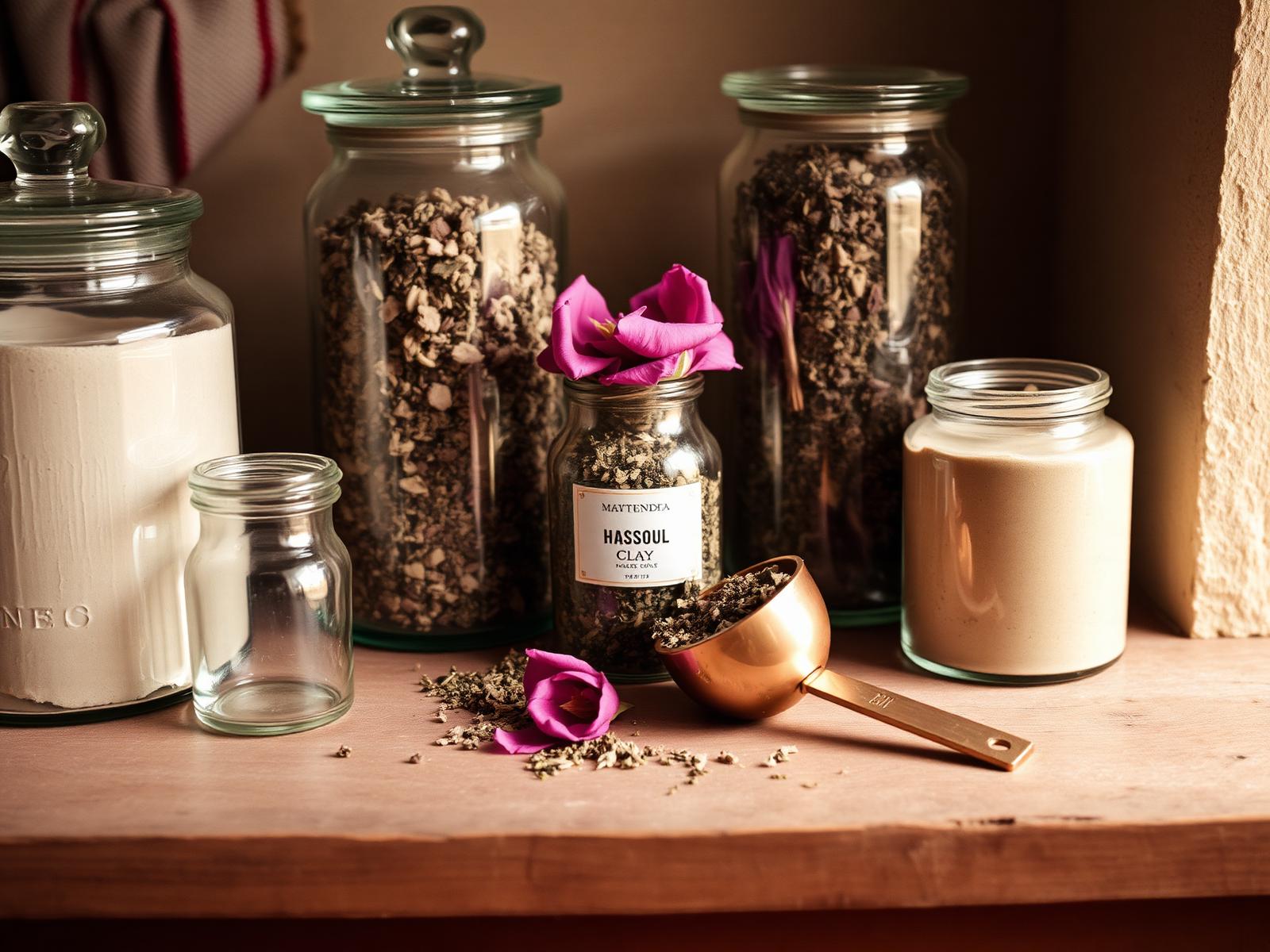
The Moroccan herbalist's counter is a study in raw material: clays, powders, dried flowers, plant oils, and the preparations built from them. This chapter looks at sourcing, quality and preparation — the parts of botanical care that rarely appear on a label.
Raw material first
Rhassoul clay, plant oils, dried rose, herbal powders and infusions are sold unblended, and quality is visible: colour, grain, smell, how a clay hydrates, how an oil settles. Formulation begins long before a formula exists.
Tradition
Clays and plant oils have been used domestically for washing, conditioning and skin preparation, often prepared fresh and used immediately rather than stored.
Evidence
Clays are effective absorbents; that much is uncontroversial. Claims that extend to hair growth or long-term skin change are not supported. Plant oils differ meaningfully in fatty-acid profile, which is measurable and does affect how they behave on hair and skin.
The Novaé approach
Sourcing standards and preparation discipline transfer directly to Novaé Holistic Care: short ingredient lists, known origin, small batches and a blend date. Ingredient selection is matched to a diagnosis, not to a trend.
From Morocco to Novaé
The lasting influence is one of restraint: fewer ingredients, better understood, prepared closer to the point of use. Where a material meets our standards for origin and consistency, it may be considered for a formulation or recommended within a home-care plan — and where it does not, it stays on the counter.

Global knowledge. Thoughtfully brought home.
Book a consultation